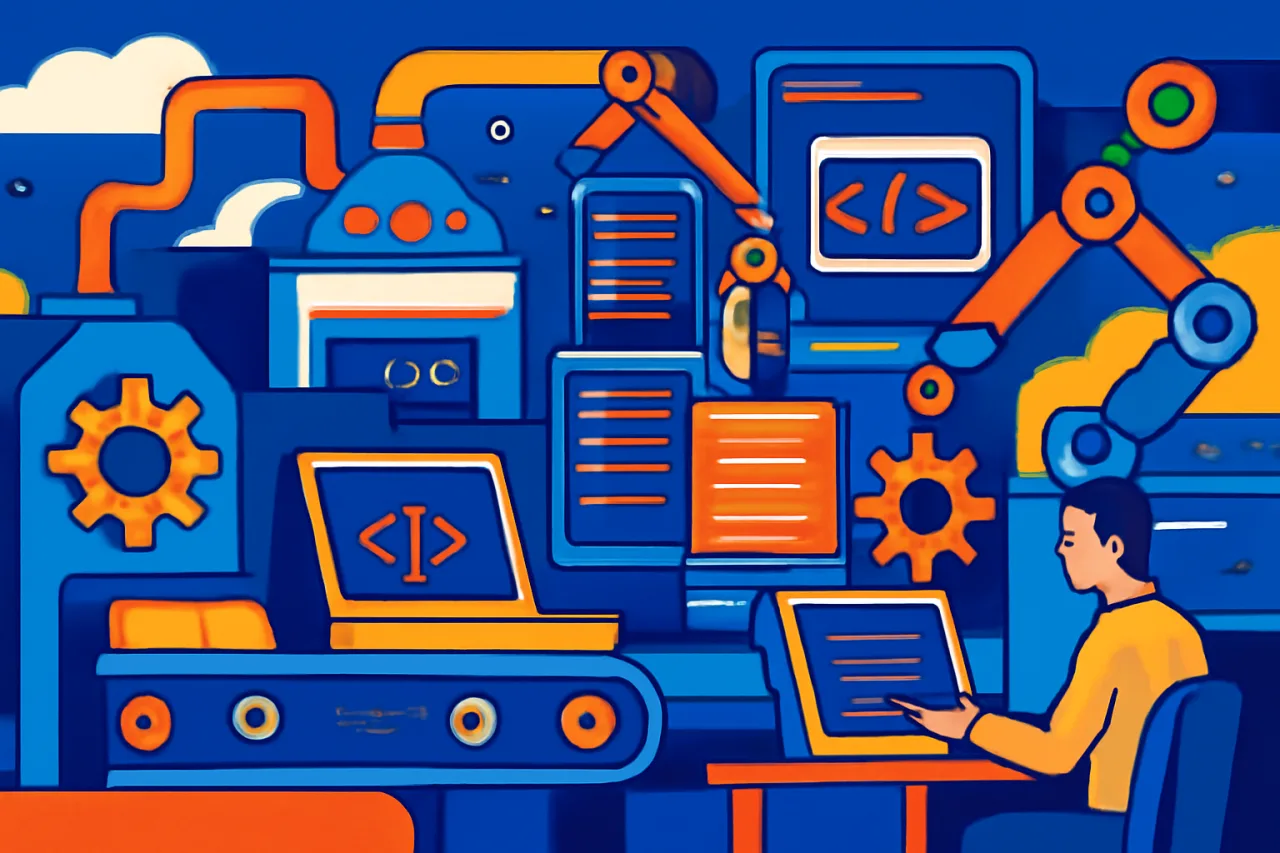
In recent years, software development processes have undergone a transformation focused on producing more code and gaining a competitive advantage. However, it is evident that this transformation is not limited to speed and cost reduction; elements that directly affect the quality and reliability of the software have also gained importance. The software factory concept, in this context, requires a reevaluation of the current software development lifecycle.
What is a Software Factory?
A software factory is a concept that addresses software development as a production system. In this model, the goal is to automate and optimize the processes from coding to testing. However, this approach should not only increase automation; it must also ensure the quality of the software. While many companies are trying to transition to this new production system, they often get lost in the effort to produce more code.
Why is it Important? Software Quality and Error Management
While accelerating the code production process offers many advantages, it also brings serious risks. Increases in speed and efficiency can mean more errors and technical debt. For example, the increase in the amount of code produced by developers also raises error rates. This situation leads developers to face the negative consequences of writing code quickly without investing in a quality control process.
Recent studies show that teams that produce code rapidly have seen their error rates increase by 50%. This is not only a technical issue but also a situation that threatens the long-term success of businesses. Software factories need to be structured to prioritize not only production but also quality.
What is Changing? Approaches and Goals
Software factories should not be limited to code production; they should also function as a platform. A true software factory should bring together existing tools, set standards, and ensure quality control at every stage of the process. For example, integrating automated testing processes will be a critical step in detecting and correcting errors.
At the same time, it should not be forgotten that software development processes need to offer better traceability and repeatability. In this context, software factories should focus on how code is written and managed, rather than just writing more code.
What’s Next? Expectations for the Future
In the future, software factories are expected to be integrated with more corporate standards and automation. However, for these processes to be effective, implementing quality control at every stage is of critical importance. Software developers will need to consider not only production speed but also the reliability and sustainability of their software.
In conclusion, software factories must ensure quality while increasing production speed. Otherwise, fast and faulty software can weaken companies' competitive power. Therefore, it is crucial for software developers and companies to adopt the goal of producing robust and sustainable software alongside speed.
Yorumlar (0)
Henüz yorum yok. İlk yorumu sen yaz.
Yorum yapmak için Sinyal'i indir
Yorumlar Sinyal hesabıyla yapılır. Mobil uygulamada giriş yap, yorum bırak.